
The Public Verdict and the Private Truth
The Cuckoo's CallingThe case’s media spectacle and police certainty demonstrate how reputation can make evidence visible while also distorting it.
increasing Bearing strength in each event
 decreasing
Bearing strength in each eventdecreasingA Death Made Spectacle
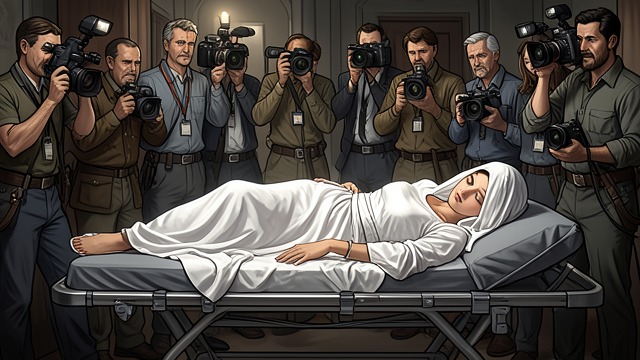
The Crowd Around the Tent
A public scene
Photographers, broadcasters, and passersby surround Lula’s body and the building. The world receives images of the dead model before it understands the circumstances of her death.
Grief packaged for viewing
The attention turns an individual death into a national story. Flowers, cameras, and speculation all become part of a spectacle in which the victim’s beauty can seem more important than her life.
The Suicide Narrative
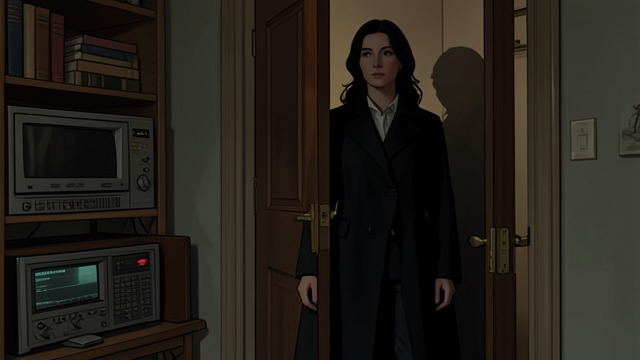
A Story That Fits
A familiar explanation
Because Lula has a history of bipolar disorder, drug use, and earlier crises, the police and press quickly understand her death through the familiar frame of suicide. Her reputation makes doubt seem unnecessary.
Evidence narrowed by expectation
The inquest and investigation collect substantial material, yet interpretations follow the first assumption. Tansy’s possible truth, the unexplained clothes, and the missing paper become easier to discount once the public verdict has hardened.
A Name in the Headlines
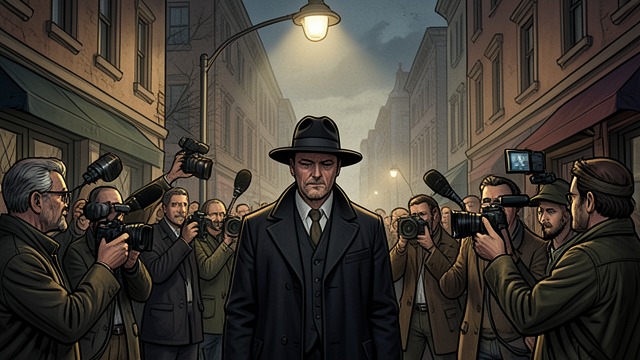
Fame Returns as Exposure
A second wave
The revelation of murder renews media interest in Lula’s face and body, alongside criticism of police work. Strike also becomes a public figure, with his father, military service, and disability folded into the coverage.
The cost of spectacle
The coverage creates recognition and new work for Strike, but it still threatens to consume the dead and the living as material. The story’s resolution does not end the public appetite that first obscured the people at its center.
The morning Lula's body is found
During the public inquiry after Lula's death
After John Bristow's arrest
